Environmental Digital Responsibility
In this article, we explore how Environmental Digital Responsibility can help you better understand the ecological consequences of an organization’s digital decisions.
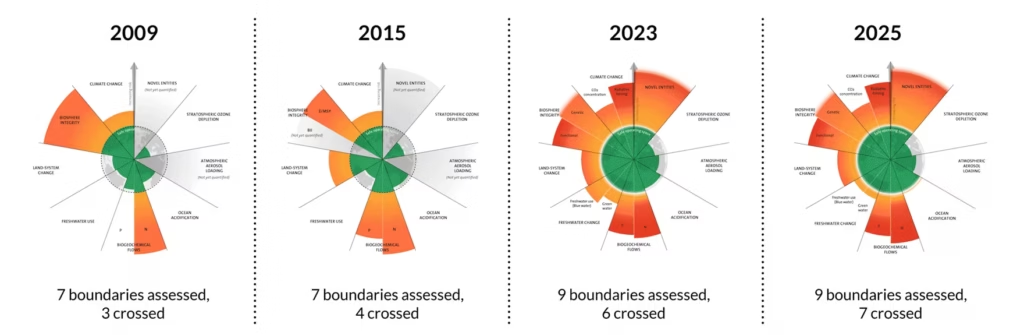
The environmental impact of the Information and Communication Technology (ICT) sector is massive and growing rapidly. Expanding generative AI growth compounds numerous existing problems on a global scale.
Common issues include:
- Energy & emissions: From data centers and network hardware to end user devices, everything on the web requires vast amounts of electricity to operate. Depending on who you ask, this produces around 2-7% of annual global emissions each year.
- Device manufacturing: Producing hardware—computers, smartphones, and other internet-connected devices—involves extensive resource extraction and includes manufacturing processes that produce waste and embodied emissions.
- E-waste: When devices reach the end of their lifespan, they become electronic waste (e-waste), which can pose environmental issues if not properly recycled. ‘Planned obsolescence‘ that’s built into our purchased devices is a significant driver of e-waste.
- Water use: A single data center can use millions of gallons of water every year. The number of data centers—especially hyperscale data centers—is skyrocketing with the growth of AI.
- Land use: The physical infrastructure needed to support the internet, including data centers and transmission lines, takes up significant land space and sometimes displaces indigenous or other already marginalized communities.
- Rebound effects: Efficiency improvements often lead to more energy and resource use, not less.
These are problems of scale to which we all contribute through using the internet. However, Big Tech companies must also be held accountable to embrace more circular, environmentally-friendly practices. There are real, tangible consequences to our ever-growing appetite for data. The health and well-being of ecosystems and everyone on our planet is at stake.
Environment-centered design is an approach to product or service development that aims to make products or services environmentally, socially and economically sustainable by focusing on the needs, limitations and preferences of target human audience and non-human strategic stakeholders. It involves knowledge and design techniques developed at the intersection of human-centered design, usability, ecology, and sustainability science.
— Monika Sznel, The Time For Environment-Centered Design Has Come
Defining Environmental Digital Responsibility
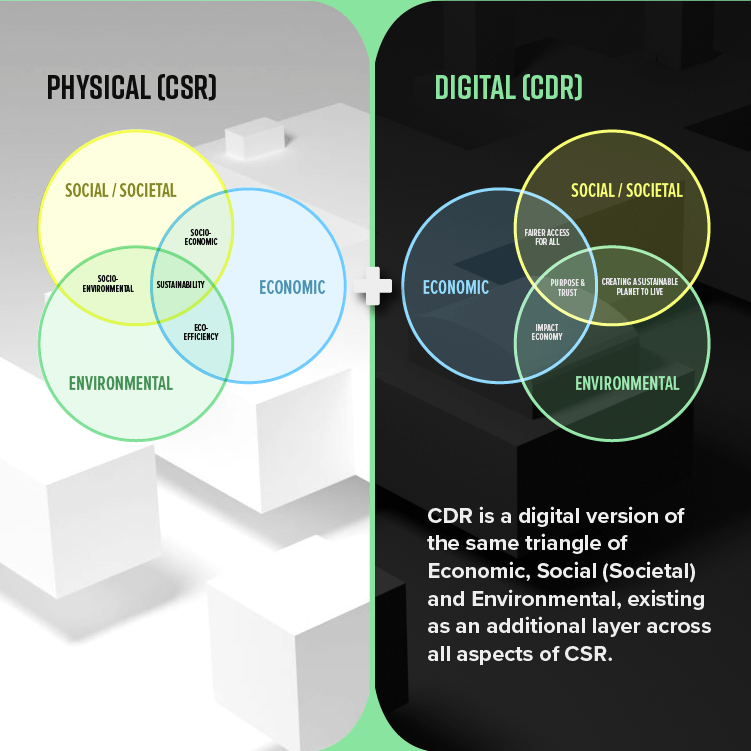
Environmental Digital Responsibility helps organizations make more ecologically responsible choices related to digital products, services, policies, and programs. It is part of a broader Corporate Digital Responsibility framework that also addresses the social and economic ramifications of our digital decisions.
Environmental Digital Responsibility requires that we design waste—physical, virtual, and otherwise—out of the system. It also requires us to remain vigilant about how our digital systems evolve over time and are retired once no longer useful.
Environmental Digital Responsibility—Creating Positive Change
Network-enabled technologies offer huge opportunities to accelerate the transition to a circular economy and address pressing global challenges like environmental degradation, climate change, food scarcity, and so on. Businesses, nonprofits, and government agencies should vigorously work to incorporate these ideas into their products, services, and programs.
As we do this, we must also consider potential environmental consequences—unintended or otherwise—that could arise from our efforts.
Environmental Digital Responsibility requires that leaders consider the potential environmental ramifications of their technology choices then devise plans to improve the impacts of those choices. What might this mean in practice? Here are some ideas.
Sustainable web design is an approach to designing web services that puts people and planet first. It delivers digital products and services that respect the principles of the Sustainable Web Manifesto: clean, efficient, open, honest, regenerative, and resilient.
— sustainablewebdesign.org

Web Sustainability
Web sustainability offers a viable approach to measurably improving and reducing the environmental impact of digital products and services.
Every organization has a website. Many have several, plus a variety of apps and other digital services they own or manage. Most also use a variety of third-party, web-based digital products and services to run their organizations. Improve impact by incorporating sustainability into your digital footprint.
Web sustainability and sustainable web design can help you achieve this. Among other things, these disciplines require that you include both human and non-human stakeholders as part of design and build processes.

Web Sustainability Guidelines
The World Wide Web Consortium’s Web Sustainability Guidelines (WSGs) are on track to become a recommended sustainability specification for teams designing, building, and managing digital products and services.
At a high level, web sustainability includes:
- Optimizing performance: Ensure that all digital assets use as few material resources as possible.
- Improving usability: Help users accomplish tasks across devices and platforms as quickly as possible and promote more sustainable choices in user journeys (think shipping, for instance).
- Content strategies: Help users quickly find meaningful content that is relevant to their needs.
- Green infrastructure: Power your digital products and services with renewable energy and optimize their use of resources.
- Governance policies: Enable policies and practices that facilitate meaningful sustainability practices over time.
Assessing Digital Life-Cycles
In addition to physical e-waste, covered below, the internet is cluttered with millions of out-of-date blog posts, improperly categorized data, broken links, and poorly designed user experiences. Plus, inefficient or otherwise out-of-date software can accelerate hardware burnout, intensifying e-waste. This also presents significant accessibility, security, and data privacy risks.
This leads to user frustration, reduced productivity, lost revenue, poor search performance, increased abandonment or churn rates, and missed opportunities. It also wastes tremendous amounts of energy, most of which, unfortunately, still comes from fossil fuels. All these things can undermine an organization’s ability to effectively serve its stakeholders.
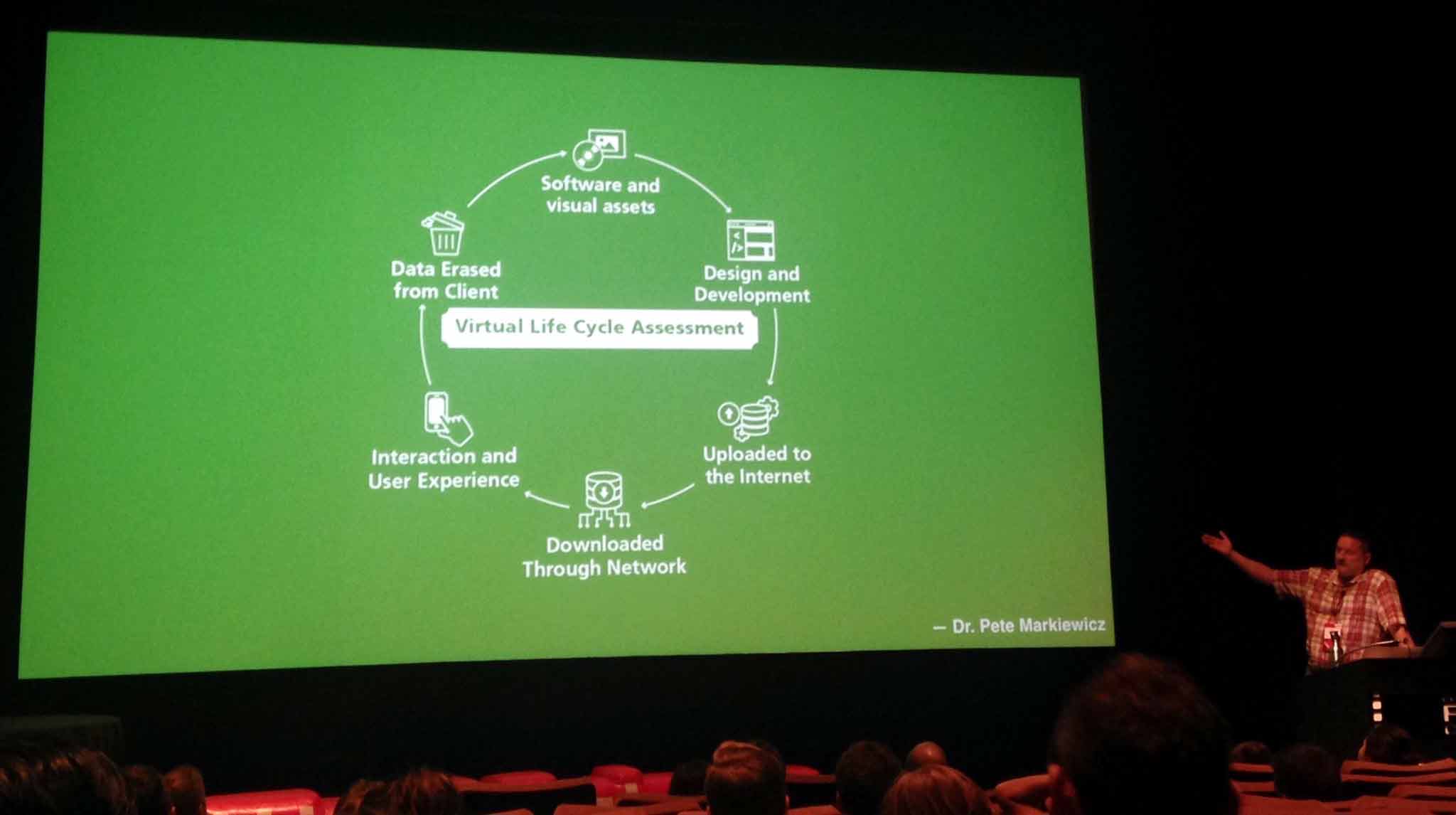
Good environmental digital responsibility policies dictate that we assess the entire life cycle of digital products and services, not just servers or end-use. Unlike with physical products, where circular, ‘cradle-to-cradle’ design models are well-defined, digital product life cycles are rarely considered.
Designing for a product’s full life-cycle requires that we consider questions such as:
- What is the most effective, efficient way to create digital products? (see sustainable web design above)
- Do we have long-term digital governance, data governance, and content governance plans in place to address digital sustainability issues as they arise?
- What is our process to retire outdated data and content?
- How might we safely discard collected user data?
- What is our process for retiring and archiving a digital product or service once it’s no longer viable?
Digital LCAs
Related content: Digital Life Cycle Assessments (DLCAs) offer the most comprehensive method to audit your organization’s digital products, services, policies, and programs.
Digital Supply Chains
Third-party tech providers make up your digital supply chain. For agencies, marketing teams, SaaS companies, and other digital-specific organizations, this can constitute the majority of your company’s emissions and present significant risk.
To address environmental issues in your digital supply chain, consider the following:
- Create a Supplier Code of Conduct
- Analyze your Scope 3 emissions
- Move toward more sustainable providers
Digital Supply Chains
Related content: Third-party providers can make or break your marketing efforts. Learn how to make more responsible digital supply chain decisions in this guide.
Responsible Data Strategies
We can design digital products and services so that all users—within your organization or outside of it—can easily manage data in the most efficient manner possible. Here are a few things to consider:
- Responsible data practices: Employ responsible data segmenting and cleanup practices based on a more sustainable data strategy:
- Offer users easy opt-out and opt-in features—privacy legislation like GDPR and CCPA increasingly require this. Delete data if users request it.
- Regularly audit marketing lists, CRM systems, and so on, culling outdated or irrelevant information.
- Backup systems at least daily, follow current security standards to protect user data, and devise a data disposal strategy.
- Content Audits: Perform regular content audits to cull digital channels of outdated, irrelevant, or non-performing content. Make evergreen content part of your content strategy.
- End-of-life planning: Define processes to archive digital products and take them offline so they no longer require energy to store and the outdated software doesn’t become a security/privacy risk.
- Emissions measurement: Finally, benchmark digital emissions data from your organization’s digital products and services, then work toward continuous improvement.
Power Consumption
Every digital product or service requires electricity to run. To minimize the long-term impacts of climate change, responsible power consumption practices are critical to managing impact in the digital economy. Consider the following:
- Design for efficiency and performance: Follow sustainable design standards and benchmark performance over time. Create ‘carbon-aware’ applications based on energy grid performance. This is especially critical for energy-intensive products like blockchain applications or training AI algorithms.
- Avoid ‘vampire power‘: Schedule automated shutdowns for devices at times when they’re not in use.
- Minimize background processes: Turn off notifications, automatic updates, etc. on all devices.
- Optimize server performance: Google used machine learning to reduce its data center cooling needs by 40%. Not every company can do this. However, you can choose to optimize performance on your internal servers and work with cloud providers that have clear and aggressive environmental policies grounded in efficiency and renewable energy.
- Purchase renewable energy: Once you have reduced energy consumption as much as possible, offset the rest with renewable energy credits (RECs). This is a key part of a Net Zero strategy.
The increasing levels of e-waste, low collection rates, and non-environmentally sound disposal and treatment of this waste stream pose significant risks to the environment and to human health…Improper management of e-waste also contributes to global warming.
— The Global E-waste Monitor

Responsible Recycling
Collectively, we produce tens of millions of tons of e-waste each year. This number is growing significantly as data center operators scramble to keep up with the pace of processing power needed by AI.
In addition to plastic, metal, and glass, e-waste often contains substances dangerous to humans, like lead, mercury, and others. When added to landfills, these chemicals seep into our groundwater, polluting lakes, streams, and rivers—the sources of drinking water for most people.
Implementing policies to properly recycle and dispose of e-waste within your organization can reduce these numbers.
Consider these practices:
- Buy refurbished: Responsible recycling isn’t just an end-of-life thing. Buy refurbished products to significantly reduce the environmental impact of hardware purchases.
- Create and enforce e-waste recycling programs: Find local partners and enact programs to ensure that all e-waste is sent to an appropriate recycling facility that doesn’t expose workers to health and environmental hazards. Be sure employees and other stakeholders understand these policies and know how to act.
- Donate old devices: If still functioning, donate outdated technology to organizations that can put it to use.
- Responsible AI policies: Create or adopt a responsible AI policy to help your team better understand the social, environmental, and economic impacts of AI within the organization.
- Improve legislation: While some progress has been made, we still have a very long way to go before effective circular e-waste practices become local, regional, and national laws. Support responsible tech legislation whenever possible.
To that last point, just a small percentage of the world’s e-waste is collected and recycled. Recoverable materials are conservatively valued at tens of billions of dollars. This is a larger sum than the GDP of many countries. There is huge potential in rethinking our e-waste streams, but only if we are willing to make it happen. Good environmental digital responsibility practices prioritize this.
Planned Obsolescence & Right to Repair
Manufacturers often intentionally cut device lifespans short to encourage upgrading everything from smartphones and laptops to refrigerators and hospital ventilators. This ‘planned obsolescence’ contributes to the e-waste statistics mentioned above.
Instead, consider the following:
- Battery Management: Follow good battery management practices to extend the life of your devices. (This could fall under responsible power consumption as well.)
- Software updates: Research software updates before implementing them. Sometimes, these updates intentionally slow down older devices.
- Support ‘right-to-repair’ legislation: Right-to-repair laws require companies to make their parts, tools, and information available to consumers and repair shops in order to extend device life. Support these laws when they come up on ballots in your area or join the Digital Right to Repair Coalition.
- Buy modular: Better yet, buy modular devices when possible so you can swap out parts rather than replacing the whole device. In Europe, Fairphone, a Certified B Corp, offers modular, Fair Trade-certified smartphones with replaceable cameras, batteries, etc.
I believe that in light of the empathy that exists at the core of our work, we as sustainability professionals must continue to be linked arm-in-arm with BIPOC communities, with the stakeholders at the front of the march advocating for equity and justice. We need all hands on deck.
—Jarami Bond, GreenBiz.org
Prioritize JEDI
Perhaps most importantly, we don’t achieve a more livable planet without prioritizing the people on it. Digital sustainability is a subset of a broader environmental justice movement. All this work must be driven by Justice, Equity, Diversity, and Inclusion (JEDI) that centers the voices of marginalized communities.
We can’t transition to a clean economy unless everyone is on board. This is especially true in the predominantly white, predominantly male technology and sustainability industries. We can do better.
New B Corp Standards
Learn how JEDI, human rights, fair work, and related practices are built into new B Corp certification standards for companies like Mightybytes.
How AI Impacts Environmental Digital Responsibility
With AI adoption growing at breakneck speeds, it is worth mentioning the pros and cons this presents when considering Environmental Digital Responsibility:
- Artificial intelligence can help solve environmental challenges. For example, Google used AI tools to reduce data center energy use by 40%.
- Unfortunately, generative AI tools also use huge amounts of resources, especially water and energy, which drive up emissions. To this end, Google’s emissions surged by 48% as it ramped up AI production over the past few years. What’s more, the company quietly rolled back its Net Zero ambitions as well. Clearly, this is not a sustainable solution.
Companies tend to downplay the environmental impacts of AI, which can lead to greenwashing and other problems. Without meaningful energy and emissions disclosures from all tech sector companies, emissions reporting against Net Zero goals becomes challenging. This is especially problematic for Scope 3 emissions.
Ethical and Sustainable AI
Related content: Understand the breadth of ethics and sustainability issues associated with widespread adoption of AI tools.
Making Environmental Digital Responsibility Policy
We can start within our own organizations to transform environmental digital responsibility ideas into actionable policies and practices. This might mean creating a cross-departmental task force or employee-led affinity group, updating company handbooks, and empowering advocates within each department to make changes.
This is a journey that won’t happen overnight. Start with small steps and make improvements as you go. Unfortunately, organizational policies will only get us so far.
Many of the challenges listed above also require legislative and regulatory guidance to enable the systemic change we need. Work with local politicians to enact policy changes. Sometimes, strategic partnerships between companies and nonprofits can accelerate these efforts. The responsible tech toolkit below can also help.
Responsible Tech Advocacy Toolkit
Advocate for responsible tech policies that support stakeholders with this resource from the B Corp Marketers Network, published on B the Change.
As always, if you have questions or want to discuss anything in this post, please contact us or message me directly on LinkedIn.
Responsible Product Development
Learn more about how Mightybytes incorporates responsible and more sustainable product development strategies to help our clients reduce risk and more quickly meet their business goals.