Web Sustainability Guidelines: A Primer
Learn how the Web Sustainability Guidelines can help your team significantly improve its digital products and services while also aligning them with broader sustainability standards, corporate ESG reporting, and measurable climate action.
Mightybytes strives to help our clients, communities, and the web industry overall understand how to apply sustainability principles to digital products and services like websites, mobile apps, and so on. In 2012, we published our first document on this subject: the Sustainable Product Manifesto. We built the first version of our web sustainability tool Ecograder shortly thereafter.
Making progress on web sustainability is slow and sometimes frustrating, given the urgency of our climate emergency. However, the World Wide Web Consortium’s Sustainable Web Interest Group offers a promising solution in the Web Sustainability Guidelines (WSGs).
This specification represents the first comprehensive set of recommendations by a large governing body to help web and digital product teams incorporate sustainability into their workflows. Their potential to address social and environmental issues associated with the web is enormous.
Table of Contents
- Purpose of the Web Sustainability Guidelines
- Why Do We Need Web Sustainability Guidelines?
- W3C and the Web Sustainability Guidelines
- Open Web Standards
- About the Guidelines
- Guidelines Features
- Guidelines Benefits
- Our B Corp Impact Hub
- How to Use the WSGs in Your Own Practice
- WSGs Case Study
- Web Sustainability FAQs
- Long-Term Web Sustainability Solutions
- Quickly Learn the WSGs
- Fast-Tracking the Web Sustainability Guidelines
Purpose of the Web Sustainability Guidelines
These guidelines exist for four primary reasons:
1. Awareness
Increase public awareness of sustainability issues related to web technologies.
2. Tooling
Promote and enable change within our industry for more sustainable web solutions, tools, and so on.
3. Education
Support widespread education and adoption among web professionals.
4. Legislation
Enable responsible legislation needed for meaningful collective action on web-specific sustainability issues.
With a well-known organization like the World Wide Web Consortium (W3C) behind these guidelines, ample opportunities exist to globally influence all points listed above.
Also, the Web Sustainability Guidelines represent many years of research, collaboration, and effort by hundreds of volunteers from around the world. This includes authors, academics, business leaders, web and UX designers, developers, sustainability consultants, and more.
The guidelines are an open resource that anyone can use to improve the digital products and services they create and manage.
Why Do We Need Web Sustainability Guidelines?
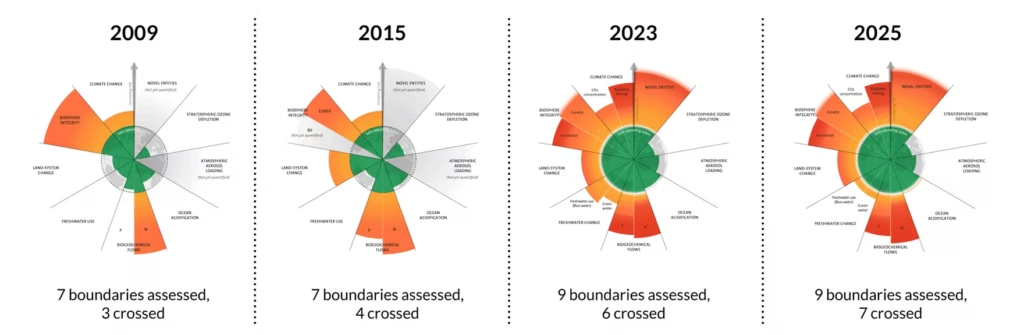
Consider the following statistics:
- Global emissions: The IPCC Report endorsed by world governments at COP 21 in Paris in 2015 targets reducing global emissions to below 1.5 degrees celsius above pre-industrial levels (commonly referred to as ‘The Paris Agreement’).
- Digital emissions: The internet is now responsible for between 3-5% of global emissions. This is growing rapidly with the rise of AI and proliferation of hyperscale data centers around the world.
- E-waste: Electronic waste has become an urgent global problem with 65 million metric tonnes produced each year. Poorly written software and the rapid growth of data centers contributes significantly to this as well.
- Internet users: Web traffic has significantly increased year-over-year with nearly 70% of the global population now online.
- Page size: Average web page sizes have more than doubled in recent years, due in part to large images and videos, JavaScript, and other third-party resources.
Every industry faces fundamental disruptions due to the points above. These statistics make a clear case for why we need to rethink established web practices and redefine success in our industry. If humanity has any hope of addressing our biggest challenges, everyone needs to be on board. This is especially true in the tech sector since it holds promise to potentially serve as part of the solution as well.
Plus, as an emerging discipline, web sustainability is currently quite fragmented. Citable techniques and industry guidance come from various sources, not all of which are reputable. Widespread adoption of clear web sustainability principles can measurably reduce the internet’s environmental impact while also making the web better for everyone.
If you want to shift money, resources, and funding into the areas that matter, working on standards is one of the most powerful things you can do. You can change the world with a conversation.
— Asim Hussain, Green Software Foundation
W3C and the Web Sustainability Guidelines
The World Wide Web Consortium is a global leader that offers user-centered recommendations such as inclusiveness (WAI) and privacy specifications (PING). Also, W3C already actively works on hundreds of web standards and specifications, including security, accessibility, interoperability, and ethical web principles.
For example, their Web Content Accessibility Guidelines (WCAG) provide a baseline “source of truth” for web accessibility adoption around the world. Since WCAG’s release in 1999, more than fifty countries have adopted some sort of accessibility law or policy that references WCAG.
With this in mind, W3C can play a crucial role in research and resolution by establishing web-specific sustainability recommendations.
In 2013, Mightybytes co-founded a W3C community group to share resources on the then nascent topic of web sustainability. This group, which grew into a vibrant online community, produced the original guidelines in 2023. Now, the Sustainable Web Interest Group meets weekly and works asynchronously to update the specification as new resources and research come to light.
Open Web Standards
Related content: Learn how open web standards make life better for everyone in this article.
80
Guidelines
Guidelines cover techniques for web teams managing digital products and services.
225
Success Criteria
Success criteria help you meet guidelines based on various sustainability aspects.
2,706
Resources
Resources provide evidence to reinforce claims and assist with guideline implementation.
200
Contributors
People from 25+ countries added their experience and expertise to shape the guidelines.
About the Guidelines
Inspired by WCAG, the Web Sustainability Guidelines include dozens of guidelines with hundreds of success criteria. Recommendations fall into four key areas considered critical to successful digital product and service development on the web:
- User Experience (UX) design
- Web development
- Hosting & infrastructure
- Business & product strategy
Let’s dig into what each category entails in a bit more detail.
21
Guidelines
65
Success Criteria
809
Resources
User Experience Design
User experience design guidelines help product designers and UX teams incorporate sustainability techniques into established and emerging workflows.
- Goals: Improve user experience through clear information architecture, asset optimization, and ongoing audits to meet people’s needs while also improving performance and efficiency and helping users understand the sustainability implications of their choices.
- Benefits: Following these guidelines can lead to reduced churn, better performance, stronger SEO, and improved accessibility, usability, and sustainability metrics that support happier users.
Common use cases
- You want to identify efficiency opportunities, such as reducing the number of steps it takes for users to complete a task.
- You want to decrease the time it takes for people to find content relevant to their needs.
- You want to make it easier for people to quickly interact with features or page content no matter their location, device, platform, age, ability, identity, or a host of other options.
Where to start
While this will change from product to product, a good place to start often includes looking at product analytics or interviewing people about their experience using your product.
20
Guidelines
48
Success Criteria
630
Resources
Web Development
Web development techniques help front- and back-end web developers improve performance and efficiency and lighten data payloads, in turn reducing the burden on hardware resources.
- Goals: Optimize code, maximize efficiency, adapt features to improve digital sustainability criteria.
- Benefits: Faster, efficient, standards-based code that’s easier to maintain over time leads to better performance across features. This improves technical SEO and accessibility while lowering abandonment rates, which can also lead to a measurable decrease in energy use and emissions.
Common use cases
- You want pages or features to load faster because customers have complained.
- You have identified duplicate or otherwise bloated scripts that impede usability and page performance.
- Off-the-shelf plugins, widgets, or other third-party services are slowing down your website.
Where to start
Identify pages and features with slow load times, auditing them to understand whether poor coding practices play a role.
12
Guidelines
34
Success Criteria
432
Resources
Hosting, Infrastructure, and Systems
The hosting, infrastructure, and systems techniques build sustainability principles into procurement, management, and optimization decisions for digital infrastructure.
- Goals: Manage configurations for caching, compression, and error handling while moving product hosting, CDNs, and third-party services to greener providers.
- Benefits: Reducing system resource requirements brings down energy and hardware usage, which in turn bring cost savings. Also, including sustainability criteria in infrastructure provisioning and data maintenance delivers reductions in operational expenses and hardware investment.
Common use cases
- You want to reduce hosting costs.
- You want to switch to a more sustainable provider with publicly available sustainability claims.
- You want to improve data storage efficiency practices.
Where to start
Identify whether your existing hosting or cloud provider makes verifiable renewable energy claims and offers robust caching, compression, and other efficiency features.
27
Guidelines
76
Success Criteria
836
Resources
Business Strategy & Product Management
The rationale for including business and product strategy guidelines in an otherwise technical specification is simple yet often misunderstood. Sustainability is intersectional, crosses disciplines, and requires a systems-level approach to problem solving. This is often within the C-suite’s remit.
As such, business strategy and product management guidelines can help leaders make more educated decisions to support web sustainability across teams and departments.
- Goals: Clear leadership support empowers teams to better incorporate sustainability principles into business, product, strategy, and reporting decisions.
- Benefits: Clear, transparent policies and procedures make it easier to meet compliance targets, reduce organizational risk, build trust, and create better products.
Common use cases
- You want to include web sustainability in your organization’s existing reporting.
- You want to enable your team to prioritize sustainability principles in decision-making.
- You want to create a cross-functional team dedicated to sustainability in its many forms.
Where to start
Meet with team leaders across your organization to identify opportunities to incorporate web sustainability principles into strategy.
Supplemental Resources
In addition to everything mentioned above, the Web Sustainability Guidelines also include a variety of supplemental resources meant help teams better utilize these materials, including:
- Tooling & reporting: A list of testing techniques and conformance methodologies
- Laws & policies: A regularly updated list of legislation pertaining to web sustainability
- At-a-glance: A paraphrased summary of the guidelines
- Web sustainability summary: An overview of web sustainability concepts
- Quick reference guide: A checklist to help teams implement the guidelines into their own processes and practices
Guidelines Features
The specification also includes robust taxonomy as well. You can sort the guidelines by specific criteria—such as emission, energy use, accessibility considerations, or AI, for example. The built-in system features 47 content filtering features that will tell you which guidelines are relevant to your choices.
Also, each guideline is weighted by linked evidence to provide the most accurate advice possible. Guidelines also include examples, clear benefits, and additional resources for added clarity. With these resources, web professionals can more easily implement the WSGs into existing practices within their organizations.
Finally, because this is a W3C specification, wide and horizontal review from external parties drive all stages of WSG development.
Guidelines Benefits
Web sustainability meaningfully addresses environmental and climate-related challenges through actions anyone can take. Also, the practice improves many aspects of digital products and services an organization creates or manages. Benefits include:
- Faster products: Following the guidelines improves speed and performance, resulting in faster download times, better responsiveness, and happier users.
- Better usability: The WSGs include dozens of success criteria that will improve user experience, reducing frustration and the amount of time people spend completing tasks or searching for content.
- Improved accessibility: Standards-based code tends to result in more accessible products. Accessibility and sustainability go hand-in-hand.
- Lower costs: Reducing data payloads across digital infrastructure can significantly lower costs.
- Reduced risk: Finally, across all sections, the Web Sustainability Guidelines can reduce risk across the organization, from legal and security to personal privacy and digital greenwashing issues.

Our B Corp Impact Hub
The Web Sustainability Guidelines align with multiple requirements under v2 B Corp certification standards. Review the full list in our B Corp Impact Hub.
How to Use the WSGs in Your Own Practice
Anyone who creates, manages, or maintains digital products can use these guidelines to improve their organization. This includes UX designers, content creators, marketers, digital strategists, web developers, product teams, and so on.
For example, purchased third party services can be a significant source of Scope 3 emissions. The guidelines include recommendations for web developers and UX designers to address this.
With that said, product and organizational leaders also play an important role. They set strategy and prioritize resources. By incorporating web sustainability into these processes, they send an important message to their teams and other stakeholders.
WSGs Case Study
Related content: Learn how Mightybytes used the Web Sustainability Guidelines to measurably improve our own website during a recent site redesign.
Getting Started with the WSGs
Want to incorporate the WSGs into your team’s existing processes or practices? Consider the following:
- Workshop the guidelines: Review the guidelines with your team in a workshop setting to generate ideas on how you might implement them.
- Create a task force: Recruit a cross-department, cross-disciplinary team to explore how digital products and services might be improved within the organization. Resource this team appropriately so they can effectively meet their goals.
- Start a conversation: Often, the first step toward creating change is to have a discussion. Who in your organization might be most influential and most interested in talking about digital sustainability? Start there.
- Low-hanging fruit: Most importantly, set a baseline to understand where your organization stands currently and how you might get started today to make change happen. More than anything, it requires willingness to take the first step.
Web Sustainability FAQs
Related content: Get quick answers to the most common web sustainability questions in this list.
Long-Term Web Sustainability Solutions
Industry and regulatory change on these and related issues is inevitable. All organizations across sectors will be significantly impacted by climate change. Supply chains, operations, and business continuity already experience disruption, including in the digital/ICT sector. We need more resilient digital solutions.
To address this, the Web Sustainability Guidelines work with existing international laws while also inspiring new legislative opportunities. The WSGs also tie into existing sustainability reporting standards. Here’s how.
Improving Industry Reporting
The group aligns its guidelines with relevant standards, including specifications from the Green Software Foundation, Global Reporting Initiative (GRI), and others. This makes it easier for teams to integrate web sustainability into broader organizational sustainability reporting initiatives.
Supporting Legislation
Additionally, digital sustainability laws were recently adopted in France and Germany. Other countries are considering similar regulations. Eventually, climate-related laws will impact the very core of how our industry conducts business.
To achieve this, we must demand meaningful regulatory guidance from lawmakers. This often starts with educating them on relevant issues. Specifications like the WSGs can help us make progress.
Quickly Learn the WSGs
Related content: Get a quick overview of each guideline in the WSGs on the Sustainable Web Design site we co-created with Wholegrain Digital.
Fast-Tracking the Web Sustainability Guidelines
The Web Sustainability Guidelines constitute a meaningful step toward broader web sustainability adoption across industries. Plus, a global organization with extensive experience in creating web standards supports them.
With that said, W3C’s Web Content Accessibility Guidelines were first introduced in May 1999. Since then, only 50 of 195 countries around the world have enacted meaningful web accessibility legislation. This is progress but there’s room for improvement.
To create the necessary change needed for sustainability, we must chart a similar but faster course. The climate crisis and others knocking on our door can’t wait.
Responsible Product Development
Learn more about how Mightybytes incorporates responsible and more sustainable product development strategies to help our clients reduce risk and more quickly meet their business goals.