Our Climate
Action Plan
This Climate Action Plan shows how Mightybytes supports efforts to limit global warming to 1.5°C. It outlines clear goals and describes policies and practices that we put in place to engage stakeholders and make continuous progress over time on climate action.
As major contributors to pollution and consumers of natural resources, businesses have a significant part in [the climate] crisis. But they can also emerge as spaces for innovation and drive solutions.
— B Lab Global, The Nature of Business, Climate & Environmental Practices of B Corps
Redefining
Success in Digital
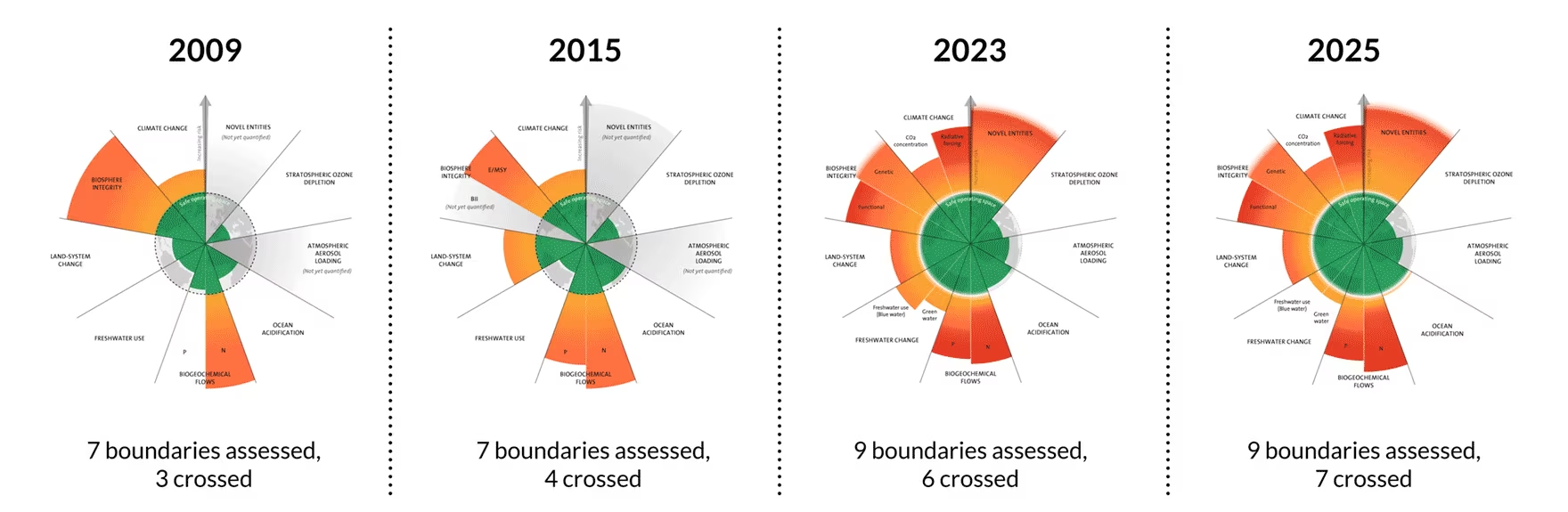
We have now crossed seven of nine planetary boundaries considered necessary for survival. Climate change is just one of these boundaries. The tech sector alone accounts for a significant amount of annual global emissions, drives inequality, and fuels ecological destruction, especially with the rapid growth of artificial intelligence. We can do better.
Climate-Positive
Coupled with a values-aligned client base, standardizing climate‑positive agency practices reinforces Mightybytes’ mission to make the web more accessible, sustainable, and a better place for everyone. This builds credibility with stakeholders while fostering innovation, advancing measurability, improving accessibility and usability, and reducing operating costs over time.
Most importantly, this Climate Action Plan empowers our company to take meaningful action on the climate crisis. This page outlines how.

Our Climate Goals
With the above in mind, we commit to the following climate-related impact goals.
1. Digital Footprints
First, we aim to measurably improve the environmental impact of digital products and services that Mightybytes designs and builds on our clients’ behalf. This includes:
- Strategy: Use W3C’s Web Sustainability Guidelines and our Impact Business Models to operationalize sustainability throughout a product’s life cycle.
- Tooling: Utilize Ecograder and other tools to measurably reduce emissions and improve performance, efficiency, usability, accessibility, etc.
- Reporting: Incorporate accessibility, emissions, and other sustainability-related impact data into regular client reporting cycles.
- Resilience: Focus on good governance, maintenance, and continuous improvement to improve digital resilience over time.
2. Emissions Scopes
Reduce emissions across scopes, including allotments for embodied and operational emissions.
3. Climate Partnerships
Work with verified partners to offset what we can’t reduce and identify other areas for improvement.
4. Shared Learning
Finally, to support a just transition, we make all our efforts publicly available so others can learn from them as well.
SMARTIE Climate Goals
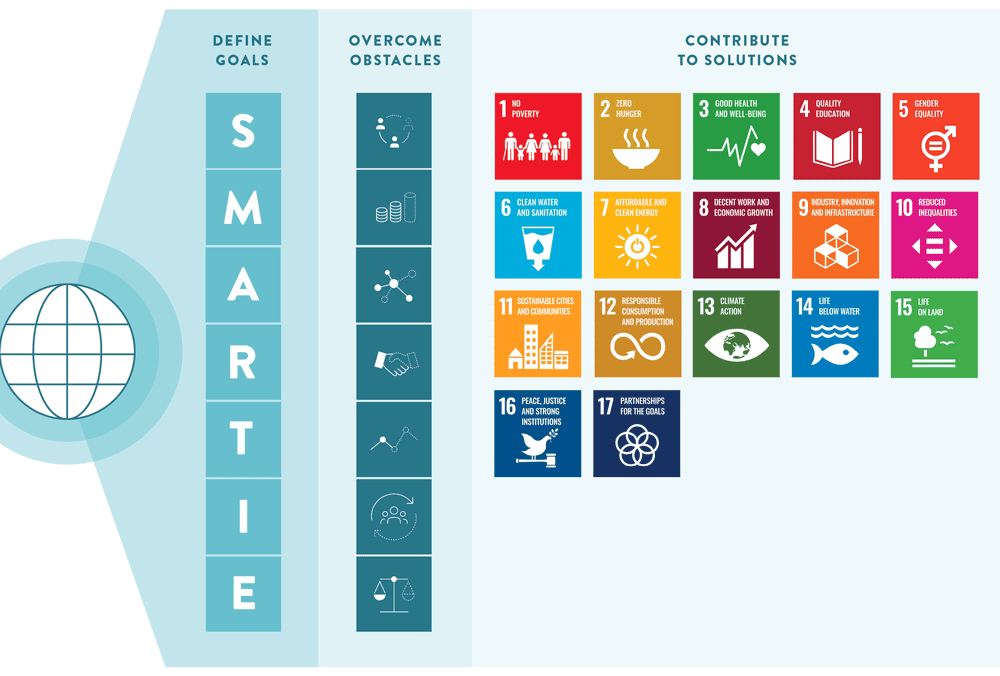
To engage stakeholders while also making meaningful progress toward our goals, we use the SMARTIE framework.
Strategic
The goals in this plan align Mightybytes’ Impact Business Models with the overall change we seek—a more sustainable web that works better for everyone and a thriving impact economy.
Measurable
We track and strive to improve all three emissions scopes under this plan as well as extend our efforts to general environmental stewardship and circularity.
Ambitious
We prioritize climate actions most relevant to our business—such as our own operations and the digital products or services we design and build for clients—while also considering larger global ambitions, including Science-Based Targets and the U.N. Sustainable Development Goals.
Realistic
Also, Mightybytes is a small company. We can only do what our resources allow. Therefore, we focus on what is within our capacity to influence.
Time-bound
We create annual impact reports on these and related efforts. To support this, we track metrics month over month both internally and on client projects.
Inclusive
As an LGBT-certified business, we’ll always ask, “who’s not included in this plan?” to ensure the solutions we pursue are grounded in climate and environmental justice.
Equitable
Finally, we must also ask how this Climate Action Plan might help those most impacted by climate change. See education, accessibility, and sustainability links in the footer below for more information.
Collaborating with Stakeholders
To support healthy communities and ecosystems in this Climate Action Plan, Mightybytes builds strategic partnerships with stakeholders who can help us meet shared impact goals.
- Client Stakeholders: values-aligned organizations that have already committed to creating environmental or societal good in some way
- Team Stakeholders: the people who work at Mightybytes
- Supplier Stakeholders: the people and organizations that provide products and services we need to remain a viable, profitable company
- Community Stakeholders: our industry, other B Corps, local partners, and so on
Committing to 1.5°C
Mightybytes has explored what clear climate action means for a digital business since well before Net Zero commitments were a thing. We were one of the first companies to acknowledge the environmental impact of digital products and services by:
- Becoming the ninth Certified B Corp in Illinois in 2011,
- Releasing a Sustainable Product Manifesto in 2012,
- Creating our pioneering web sustainability tool Ecograder in 2013,
- Publishing the groundbreaking book, Designing for Sustainability: A Guide to Building Greener Digital Products and Services with O’Reilly Media in 2016,
- Implementing an impact business model specific to sustainability,
- Collaborating with others across the globe on the World Wide Web Consortium’s Web Sustainability Guidelines.
‘Net Zero’ Challenges
While Big Tech companies were early adopters of renewable energy, our industry overall has been slow to lead on operational progress related to climate and environmental justice. As a digital agency, we have identified four significant blockers to making collective progress on global warming.
1. Data Disclosure
Many third-party suppliers don’t disclose the data needed for effective digital sustainability or climate strategies, especially when it comes to Scope 3 emissions.
2. Lack of Open Standards
Similarly, our industry lacks defined, open standards for measuring and improving sustainability. This is especially problematic with the rapid rise of generative AI.
3. Moving Targets
Because climate goals are constantly moving targets, it is critical not only to prioritize climate action, but also to focus on continuous improvement by dedicating resources over time to these efforts. Many organizations struggle with this.
4. Stakeholder Education
Finally, many industry professionals are unaware that digital products or services even have an environmental impact, let alone how significant it is or what they can do about it. This is especially true in the field of marketing.
Given all this, we engage stakeholders in our mission and encourage them to take collective action through the climate actions listed below.
All models are wrong, but some are useful.
— George E.P. Box and Norman R. Draper, Empirical Model Building and Response Surface
Embodied vs. Operational Emissions
Also, without a more accurate and globally recognized model specific to software life cycles, we use the Sustainable Web Design model, an attributional, open formula used to estimate emissions from digital products and services that Mightybytes creates and manages on our clients’ behalf.
As an attributional model, it includes allotments for both embodied and operational emissions. However, we also acknowledge the challenges inherent with this approach. Attributional models can lead to drastically over- or underestimating emissions. As new models are released, we plan to adjust our approach accordingly.
For our own operational emissions, Mightybytes uses SME Climate Hub tools, which are custom made to support small businesses. These tools are spend-based so potentially not as accurate as we’d like. However, they provide us with a meaningful way to track emissions over time using available resources.
Emissions Scopes
Below is a breakdown of relevant data related to emissions scopes and our climate action commitments.
- Scope 1 emissions: Without a physical office and no owned energy sources, Scope 1 emissions are not relevant to Mightybytes.
- Scope 2 emissions: We include estimated team workstation and workspace energy use based on standard square footage for a home office in overall company emissions estimates.
- Scope 3 emissions: As a virtual company in the digital space, most of our emissions fall into Scope 3 emissions in two categories:
- Upstream: Emissions related to our use of third-party services Mightybytes subscribes to, such as hosting, marketing platforms, and so on.
- Downstream: Emissions related to energy from end user devices.
Allocating Resources
As a small, virtual company, Mightybytes doesn’t have endless resources to apply to our impact efforts. To make the most of available resources that we can contribute to climate action, we prioritize a number of stakeholder-driven design and operational practices.
1. Impact Business Models
First, the company’s three impact business models allow us to incorporate accessibility, sustainability, and education into our ongoing work for clients and other stakeholders. This helps us cover hard costs related to how we help stakeholders embrace responsible and more sustainable digital practices.
2. Participatory Design
Next, good collaboration and participatory design practices help us integrate various stakeholder perspectives into our impact efforts and the work we deliver on behalf of our clients.
3. Continuous Improvement
Finally, regular internal and client reporting, coupled with annual impact reporting, enable Mightybytes to show measurable progress over time on the efforts outlined in this Climate Action Plan.
Climate Actions
Below are specific actions Mightybytes takes to fulfill our commitments and meet the goals outlined in this Climate Action Plan.
- Goal: Reduce what we can across emissions scopes.
- Target: Reduce year-over-year emissions by 10-20%.
- Known challenge: As we get access to more data, especially for Scope 3, company emissions tend to go up, not down.
- Resource allocation: Impact business models and tools like SME Climate Hub help to simplify this process so as to exist within our means.
- Engaging stakeholders: Since the Greenhouse Gas Protocol does not yet provide meaningful guidance for software and digital marketing projects, we create partnerships and educational materials to help others in our industry.
- Measuring progress: Ecograder can help us keep track of estimated emissions via client projects. SME Climate Hub helps us track operational emissions annually.
- Goal: Offset what we can’t reduce through verified projects through trusted third-party partners. Include team workstations and home offices.
- Target: Decrease the amount we need to offset or purchase RECs for by 10-20% year-over-year.
- Known challenges: Spend-based tools don’t provide the most accurate data and don’t always account meaningfully for emissions from digital products and services.
- Resource allocation: RECs and offsets have hard costs associated with them. While affordable, these costs need to be folded into Mightybytes’ operating costs and budgeting processes.
- Engaging stakeholders: Annual impact reports help stakeholders better understand how we reduce emissions and offset what we can’t reduce.
- Measuring progress: We compare progress in year-over-year impact reports and are working toward a monthly measurement process.
- Goal: Reduce the amount of business-related travel we do.
- Target: Reduce year-over-year business-related travel by 10-20%.
- Known challenges: Data on emissions related to videoconferencing is not easy to come by (and sometimes inaccurate). Also, as our work on digital sustainability gains more exposure, more travel opportunities arise.
- Resource allocation: We gauge the importance of business travel opportunities case-by-case based on how they serve both our business and climate goals.
- Engaging stakeholders: As a virtual company in the 21st century, many opportunities exist to conduct business online. However, trends toward in-person collaboration and experiential learning also weigh into these decisions.
- Measuring progress: This is represented in #1 and #2 above in annual impact reports.
- Goal: Reduce emissions associated with commuting.
- Target: Reduce year-over-year commuting by 10-20%.
- Known challenge: Operating as a virtual company decreases day-to-day commuting but can increase commuting length for quarterly meetings as our team locates further away from Chicagoland.
- Resource allocation: As a small business, Mightybytes does not have the resources to cover travel-related expenses for all employees for quarterly team meetings. However, in-person collaboration is also important to our company ethos, so this is a known tension. If there are resources available to meet in-person, we will prioritize this.
- Engaging stakeholders: Mightybytes doesn’t hire new employees very often. We address this on a case-by-case basis as needs arise and try to make expectations clear.
- Measuring progress: Given the company’s Chicago location, this is measured year-over-year by the number of employees in or near Chicagoland.
- Goal: Educate stakeholders about how they can reduce their digital carbon footprint and improve the social and environmental impact of their digital products and services.
- Target: Increase the year-over-year reach of our educational materials while also being mindful of their environmental impact.
- Known challenge: Stakeholders, especially clients, often don’t see this as a priority nor do they understand why they should.
- Resource allocation: We integrate these materials into ongoing marketing initiatives to provide added value for prospects. Educational materials are also part of our education impact business model.
- Engaging stakeholders: The educational nature of these materials sometimes makes it easier to engage stakeholders in meaningful ways.
- Measuring progress: Common progress metrics for initiatives like this include number of webinar or online class attendees, number of books sold, number of conference attendees, and so on. Associating accurate emissions estimates with these activities is currently challenging.
- Goal: Work with suppliers who share our climate commitments and are willing to engage with us in strategic partnerships.
- Target: Increase the number of partnership opportunities by 10% each year.
- Known challenge: The tech industry lags behind in making publicly available commitments to more responsible practices.
- Resource allocation: We still need to improve criteria for what drives a successful partnership. For example, is it purely financial or grounded in something else, like creating shared value? This will help us better understand resources we can allocate.
- Engaging stakeholders: We are working with existing partners and suppliers to improve our Supplier Code of Conduct.
- Measuring progress: How might we measure collective progress with suppliers against climate goals? Shared reduction in emissions?
- Goal: Partner with community stakeholders on climate-related impact projects.
- Target: Depending on scope, publish or otherwise launch at least one significant community project per year.
- Known challenge: As a small company, we can devote limited resources to projects without some sort of direct monetary advantage to Mightybytes.
- Resource allocation: Monetary benefits enable us to allocate more resources to these types of projects. This is one reason why we incorporated our own nonprofit organization.
- Engaging stakeholders: Fortunately, many of our client projects fall into this category. Given our approach to business development, we typically hover between 85-95% of our total clients aligning on values.
- Measuring progress: Historically, we have measured this by the number of values-aligned clients who hire us for projects.
- Goal: Engage current clients in our climate efforts.
- Target: Persuade at least one client per year to start prioritizing web sustainability.
- Known challenge: Clients don’t understand why this is important and often haven’t allocated any resources to advancing digital sustainability.
- Resource allocation: To date, most of these efforts fall under the umbrella of marketing. However, impact business models are helping us allocate resources to incorporate digital sustainability reporting into monthly client reports.
- Engaging stakeholders: Changing laws related to both climate and digital can help us engage clients on these topics in meaningful ways. However, these laws are still a ways off yet, especially in the U.S.
- Measuring progress: Until legislation changes, the best way for us to measure progress is by counting the number of clients who engage with the sustainability metrics in our monthly reports.
- Goal: Promote more responsible tech and impact economy legislation.
- Target: Increase the year-over-year number of company advocacy actions that promote stakeholder governance and responsible tech legislation by 10-20%.
- Known challenge: Unfortunately, most legislators don’t see digital as a driving force behind global warming. Also, some are actively hostile toward both efforts to curb climate change and stakeholder economy legislation.
- Resource allocation: Similarly, focusing on impact-driven clients like social enterprises and nonprofits makes it challenging to allocate resources to climate advocacy. These organizations are often themselves quite resource-constrained.
- Engaging stakeholders: However, there is a growing global community that sees digital sustainability as critical to a better future for everyone. Mightybytes has been at the forefront of these efforts for well over a decade now. This makes it much easier to engage stakeholders on all the points in this Climate Action Plan.
- Measuring progress: We track the number of advocacy actions taken each year on the Government Affairs and Collective Action page of our website.
Approval
The tasks outlined in this document are submitted for feedback to relevant stakeholders defined above and approved by both the President and Operations Manager. Upon approval, they are published to our website to improve operational transparency and accountability.
Last Review: January 2026

Still have B Corp Questions?
Want to learn more about how Mightybytes uses our B Corp certification to create positive change across communities and ecosystems? Schedule a conversation with Tim.